


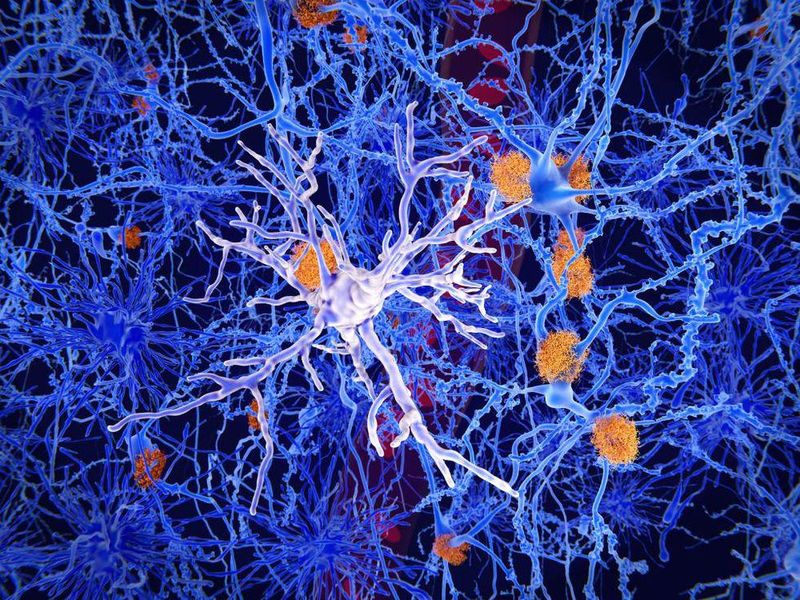
Midlife measurements of plasma amyloid-beta may predict risk for mild cognitive impairment, dementia in late life
THURSDAY, Aug. 5, 2021 (HealthDay News) — Plasma concentrations of amyloid-beta at midlife are associated with the risk for mild cognitive impairment (MCI) and dementia later in life, according to a study published online Aug. 4 in Neurology.
Kevin J. Sullivan, Ph.D., M.P.H., from the University of Mississippi Medical Center in Jackson, and colleagues examined the association between midlife plasma A and the risk for MCI and dementia. In a subsample of the Atherosclerosis Risk in Communities cohort study, plasma A 42 and A 40 were measured retrospectively for 2,284 participants.
The researchers found that each doubling of midlife A 42:A 40 was associated with a significantly lower risk for MCI/dementia (relative risk ratio, 0.63), only up to about the median (spline model threshold, 0.20). Each standard deviation increase in plasma A 42 (10 pg/mL) was associated with a lower risk for MCI-dementia (relative risk ratio, 0.87), while a higher risk for MCI/dementia was seen with every standard deviation increase in plasma A 40 (67 pg/mL; relative risk ratio, 1.15). When repeating models using late-life plasma A predictors, the associations were comparable but slightly weaker statistically.
“A doubling of this ratio under this threshold at midlife was associated with a 37 percent lower risk of MCI or dementia, which is comparable to about five years of younger age, and a doubling of this ratio under this threshold at late life was comparable to about three years younger age,” Sullivan said in a statement. “Amyloid in the blood may be useful as a biomarker for risk of future cognitive impairment.”
Several authors disclosed financial ties to the pharmaceutical industry.
Abstract/Full Text (subscription or payment may be required)
Copyright © 2021 HealthDay. All rights reserved.